

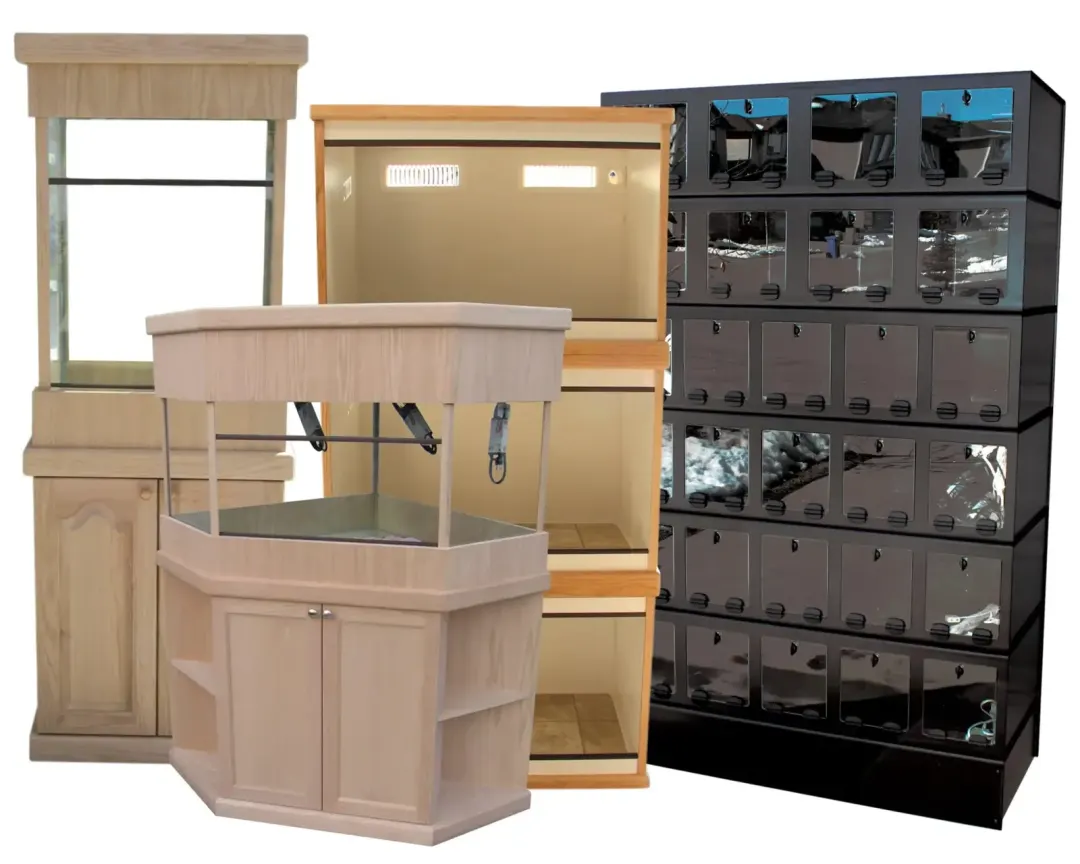
With the right terrarium or vivarium, you can build a thriving little ecosystem right in your living room: a slice of rainforest, desert, or mountain stream behind glass.
Over the last few years, terrariums and vivariums have exploded, with more and more people discovering the joy of creating their own mini ecosystems. From simple desktop enclosures to elaborate feature walls, these glass-encased worlds can fit almost any home, even a condo or townhome with limited space.
Terrarium or vivarium?
Much like an aquarium showcases your fish, a terrarium is living space for your reptile or amphibian. A vivarium is a similar idea, but the focus can include both plants and animals working together as one environment.
The word "terrarium" comes from the Latin terra, for "earth," while "vivarium" is rooted in the Latin for "life." Our custom glass and PVC enclosures are designed with exactly that in mind: giving animals the space, heat, light, and substrate they need to thrive, while creating a display you actually want in your living room.
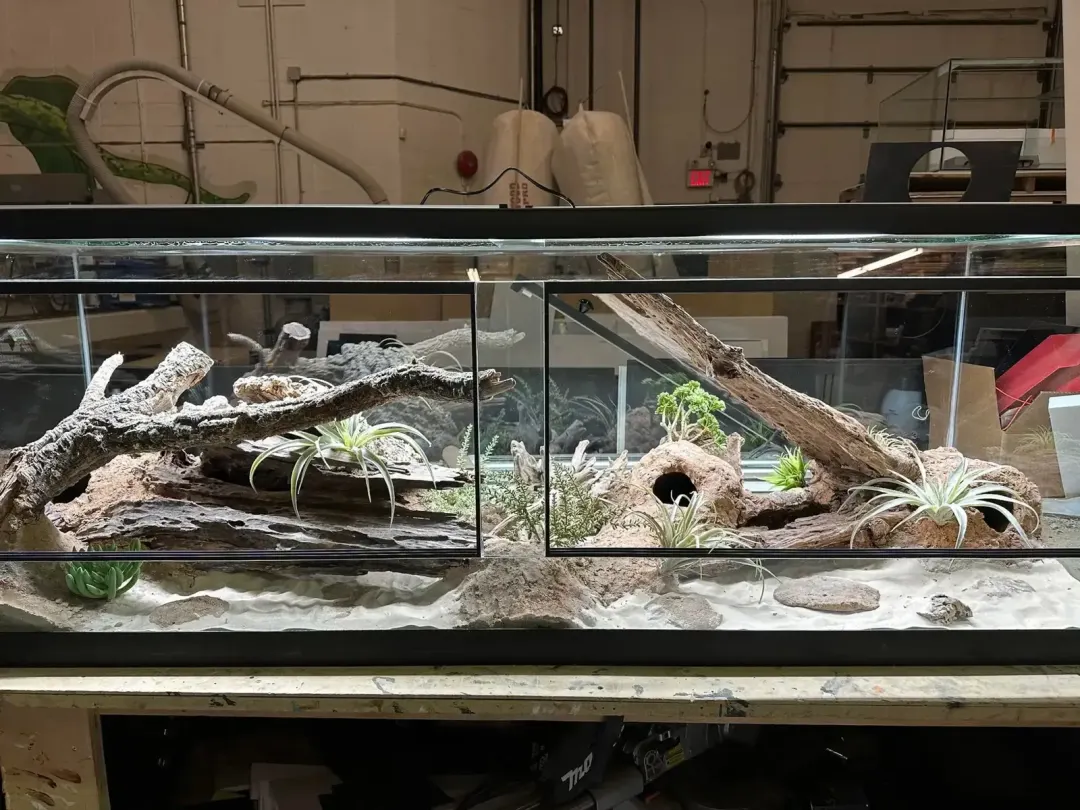
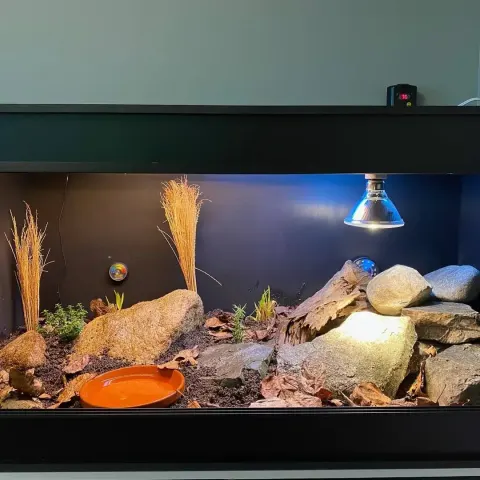
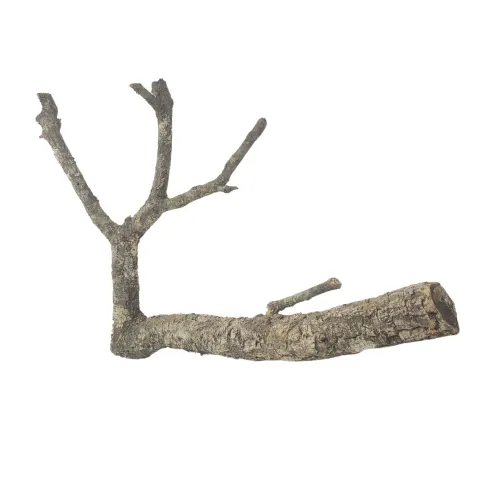
Inside the glass, the goal is to recreate a more natural environment: live plants, textured backgrounds, climbing branches, hides, ledges, running water, or even a small waterfall. Set up properly, you're not just building a tank, you're building an experience for the animal and for the people who get to watch it.
Why reptiles work so well in condos
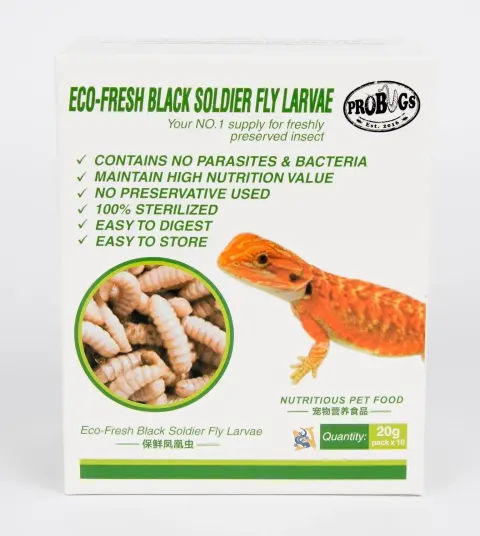
Compared to traditional pets, reptiles and amphibians fit surprisingly well into condo life. They don't need to be walked in the snow, they don't bark at the neighbours and, for people with allergies, many species are a far better option than cats or dogs. Once a terrarium is set up, most of the daily care is basic: spot cleaning, fresh water, and feeding, plus scheduled water changes for aquatic species.
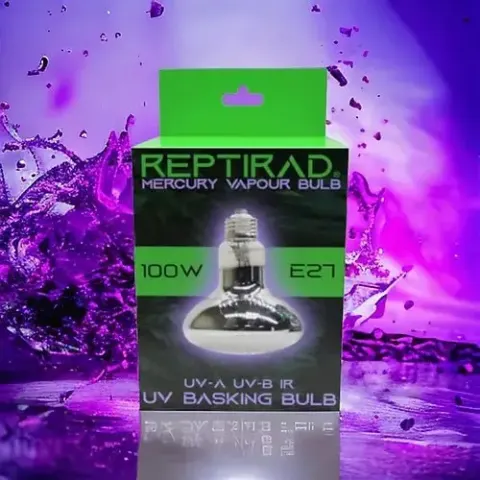
There are some important details to get right. Heat lamps or radiant heat panels, UV or full-spectrum lighting, and reliable thermostats and timers are all essential. Humidity often needs managing too, especially for tropical species. Some setups need humidity as high as 90 percent so the animals can shed, breathe, and function properly.
There are also reasonable concerns around reptiles, salmonella in particular, but responsible care goes a long way. Keeping the enclosure clean, washing hands after handling animals and décor, and teaching kids simple hygiene rules dramatically reduces the risk.
What does it cost to get started?
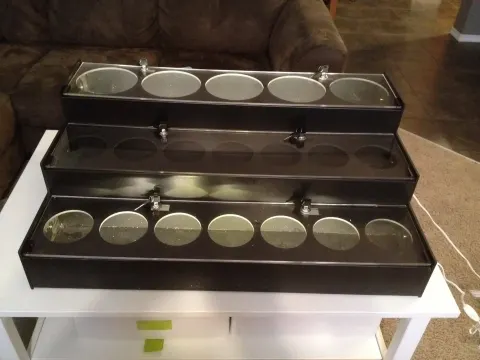
The cost of a terrarium varies widely with size, shape, and how elaborate you want to get. A basic setup might be as simple as a 20-gallon aquarium turned on its side and converted for terrestrial use. At the other end are fully themed, furniture-grade enclosures that act as a statement piece in your home.
Custom enclosures can range from around the price of a dinner out to several thousand dollars, depending on the materials, lighting, automation, and décor. Then there's the cost of the animals themselves. Some hardy beginner reptiles are quite affordable, while rare morphs or large, specialized species can climb into the thousands.
Do your homework
Both Greg West of Cornel's World and long-time industry partners like Allen Abbot of NewLife Enclosures stress the same thing: anyone thinking about a new reptile or amphibian needs to do their research first. Learn where the animal comes from, how big it will get, what it eats, and what kind of environment it needs to feel secure.
Understand everything about your choice of reptile. You can't just look at the price tag and the glass box and say, "Wow, this will look great in our living room." You need to know what's living inside that glass.
That research doesn't have to be overwhelming. Reptile shows, responsible breeders, specialist stores, and communities like the ones we're involved with across Canada are full of people happy to help newcomers start the right way.
Building your own mini Pandora
Put it all together, the right enclosure, lighting and heating, a thoughtful layout, and an animal you understand, and a terrarium becomes much more than a box with a pet in it. It's a living landscape that changes over time as plants grow, animals explore, and you tweak the design.
Whether you're in a downtown condo or a suburban townhouse, you can still have your own patch of jungle, desert bluff, or mossy forest. And unlike a movie set, you don't need Hollywood money to do it, just some planning, good advice, and a bit of imagination.
The original print layout
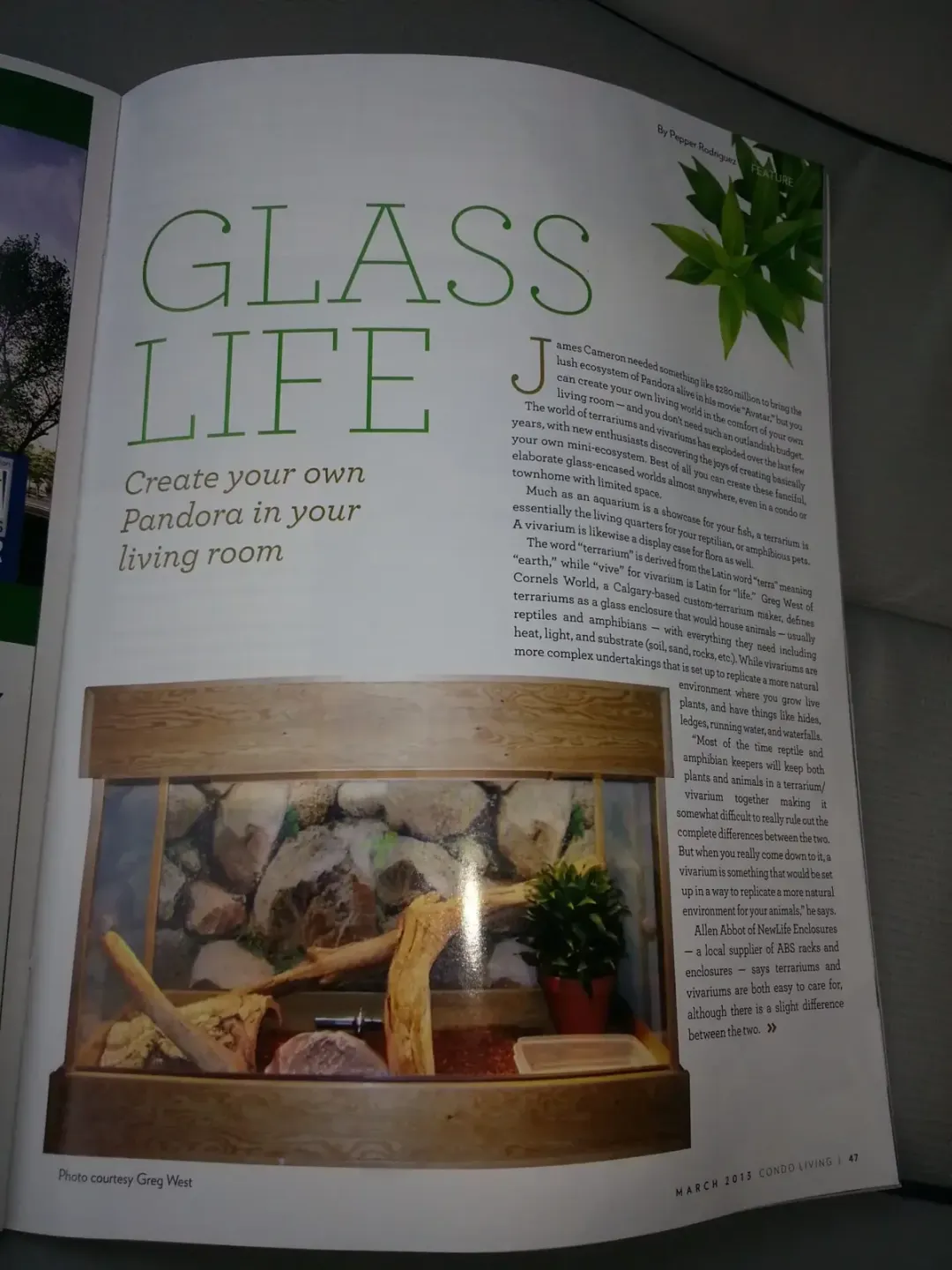
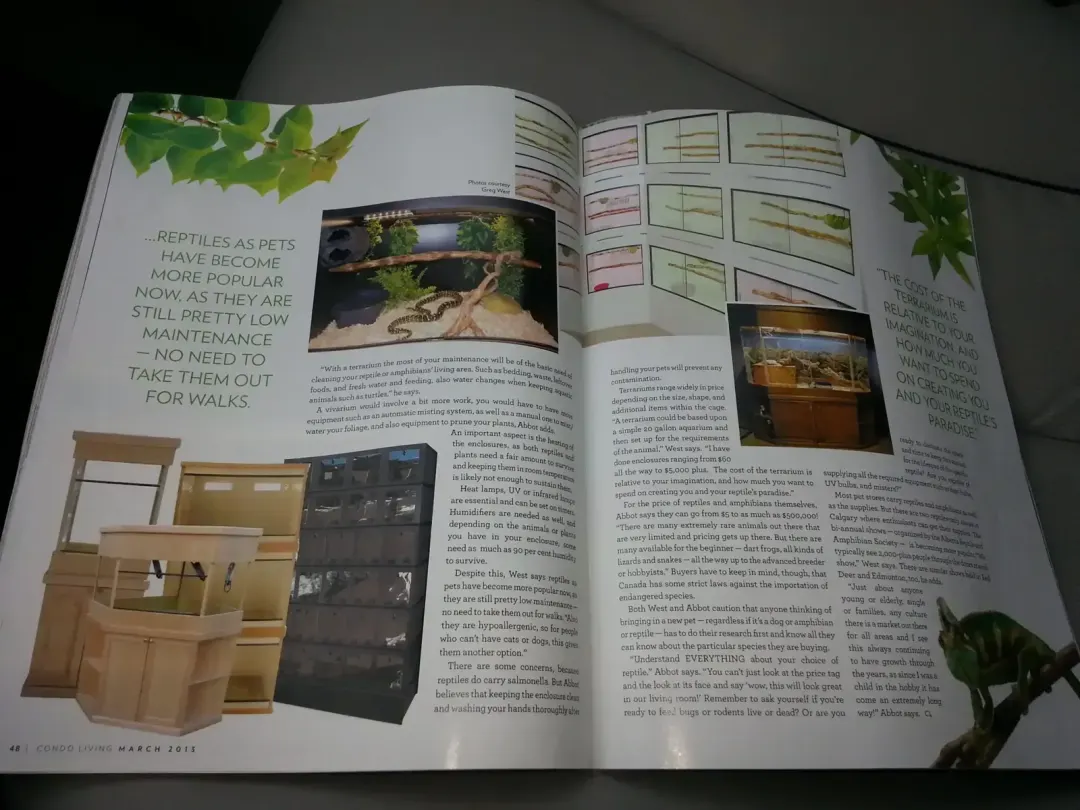
Adapted from "Glass Life: Create Your Own Pandora in Your Living Room" by Pepper Rodriguez, originally published in Condo Living, March 2013. Here is how the feature appeared in print.

Plan your own little ecosystem
Tell us the animal and the space, and we will design a glass or PVC enclosure around them.